


Civil Rights Hair

The conversation about black women and how they desire to wear their hair isn't new on my page, but today we add a new term buzzing around the internet into the mix. We're going to talk about how some black women are describing their perspective on how it feels to wear their natural hair out in the world today.
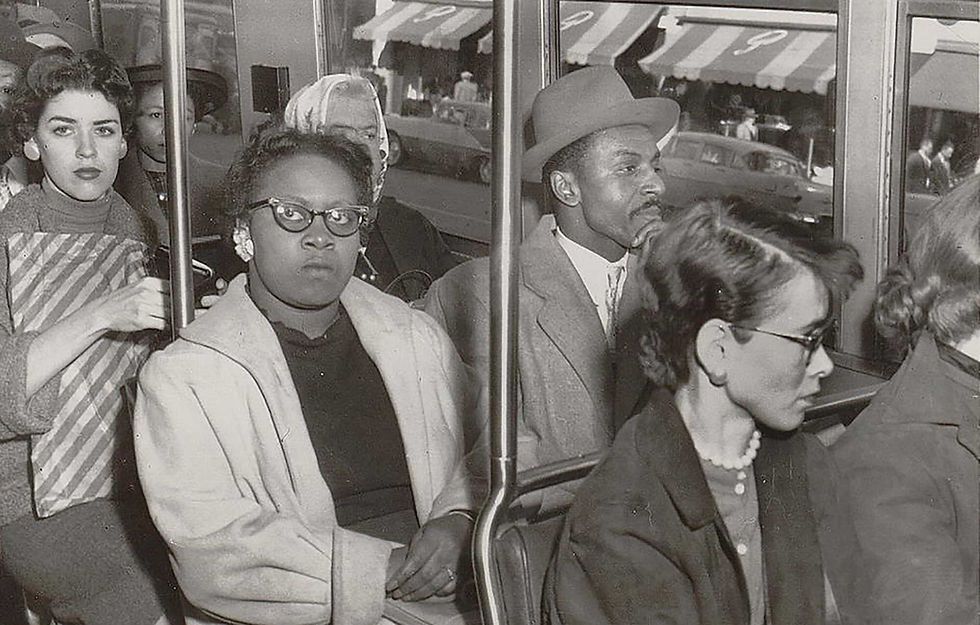
What is Civil Rights Hair?
Not a question I ever thought i'd address in my zillenial lifetime, but today I'm up for the challenge. First, we have to define what"Civil Rights" is. The Civil Rights Movement was sparked from Brown vs Board Education. Where Oliver Brown and his family, along with other highly respected, African American community leaders like Thurgood Marshall, sued the state for Brown's family not being allowed entry into a nearby school. Stating the reason being was that the school was for white Americans only. They expressed that this treatment was a violation to the 14th Amendment, concluding the ruling leaning in their favor.


Separate, but equal was now deemed unfair in the eyes of the law, as it had been to African Americans since day one. All of this would unfortunately lead to a strew of heartbreaking, yet pivotal occurrences that would ripple throughout the decades. Essentially, we could see that during the late 1950's-1960's, for African Americans strife and resistance were on the forefront of their minds at all times. Even though every decade of history is enriched with layers of our monumental triumphs, the era of the Civil Rights Movement brought the heaviness of grief and struggle. This is why I believe some women today connect their natural hair to the Civil Rights Era. Navigating and maintaining natural hair for black women can bring feelings like grief and struggle to the surface, due to the inherited disconnect between who defines our beauty and what that has to mean for our hair.
The Afro
Controversial conversations surrounding the crown of a black woman is to be expected when you think about it. What goes around comes around, and black women, we have been here before. Always in the tight crease of conservative politic coming down from it's peak, but still holding onto rulership, as we're experiencing now in 2026. In that regard, let's go back to the early 1920's, where the term assimilation was alive and well. In order to gain some type of grounding, normalcy and most of all, safety, many people would do their best to blend in.
Being that whiteness was the relation to a class of people with rights. Adopting it's culture, could gain you opportunity and/or slightly fewer inconveniences.
The way this showed up in how black women wore their hair was by being hypervigilant of how their was kept. Hot combing their hair into presses and curls, sleek and smooth, similarly to white women. This was the most acceptable way to survive as a black woman at this time. That is, until 1962 showed up bringing something they would call "Black Pride."
Many young, black Americans were tired of the only option being assimilation, especially after seeing countless protesters during the Civil Rights Movement be violently pushed around by their white counterparts during peaceful protests. In response, they would gather up and organize into a black resistance group known as the Black Panthers. Often, you would see them wearing perfectly circular afros, that took time and maintenance to achieve. Mainly to symbolize said resistance, black pride, and self granted permission to take up space. Over time, it would gain popularity as well as critiques by the masses, but still be well received by the younger crowd overall.


How We Relate To Our Past
What the women who silked and pressed their hair into assimilation and the ones who picked and molded their resistance had in common was the desire to live further past survival. The need to create a space in the world where they could belong is a concept, I feel, as black women we are still cultivating for ourselves today. I also feel that in each decade in the past our hair has only been taught to us for what it can do for others, and not always how it could serve us on a personal level. Unfortunately, we're not always granted that privilege, that's something we'll have to take in moments we feel brave enough to do so. When I hear a woman describe her natural locks as Civil Rights hair, I hear someone who hasn't given herself permission to see our full picture. That being the history of the Civil Rights Movement, and also the lack of understanding of the capabilities of her own hair. As I stated in my previous blog,
In Conclusion
Our hair adapts to the survival of our culture, and has taken many shapes in alliance. There is no need to shame one more than the other, when the goal we have is often common. To create the spaces where we feel seen, heard, and beautiful in what we create for ourselves. Whatever that may be, it should be rooted in progression not shame. I hope that with the rich history we have surrounding us, and the doors that have been opened in our favor today, that we continue to honor all versions of our past. As they are the reason for the ability for us to choose how we show up and create today.


Comments